About Our BrandAbout Our Brand

About Our Brand

Safety History

Trace Subaru's history of vehicle development
back to the 1950s.

1960’s

1960

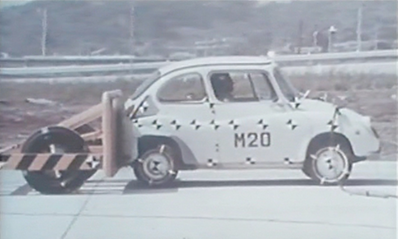
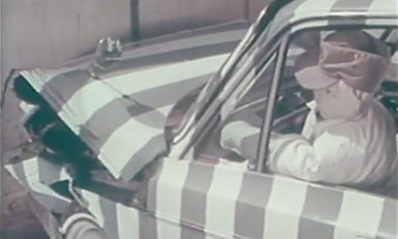
Advanced, realistic crash testing conducted as a Japanese manufacturer making use of guiderails and crash test dummies.

1960

1960
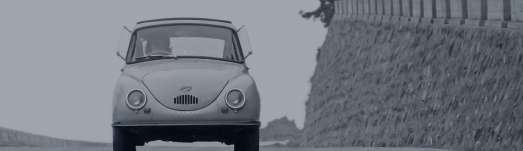
Rear-end crash testing of the Subaru360.

1965

1965
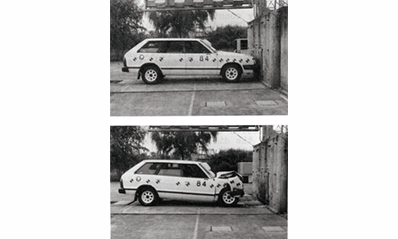
The first Japanese manufacturer to begin crash testing (frontal, rear-end).

1966

Subaru1000: Subaru’s first FWD car powered by the SUBARU BOXER is released. High levels of safety are obtained in collision safety testing.

1970’s

1971

1971
A special Subaru collision safety programme is developed as part of collision safety testing for the Leone.

1972

1972
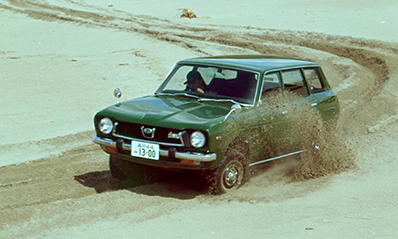
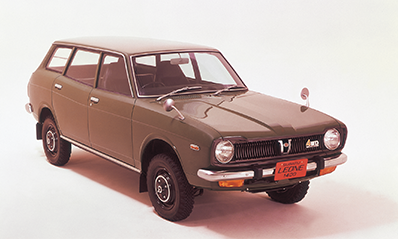
Subaru Leone 4WD Station Wagon, the world’s first mass-produced 4WD passenger car, is released. It features a selective system where the driver could switch from 4WD to 2WD mode.

1977

1977
Engine drop tests begin for the American Leone (L-Series).

1979

1979
Leone 4WD tests: As part of steps to improve collision safety for the Leone 4WD, the propeller shaft and differential are designed to split and drop down during a collision.

1980’s

1981

1981
“Leone 1800cc 4WD Automatic” is released, using the world’s first wet hydraulic multi-plate clutch in the rear wheel drive transfer case of its AWD automatic transmission.

1983

1983
4WD turbo Leone equipped with an air suspension system to hydraulically adjust the height of the car.

1986

Research into the use of high-tensile materials for car frames begins.

1986

1986
XT: Plastic bumpers that comply with the five-mile-an-hour rule introduced in America as the first “energy absorbing bumpers” developed in the world.

1986

1986
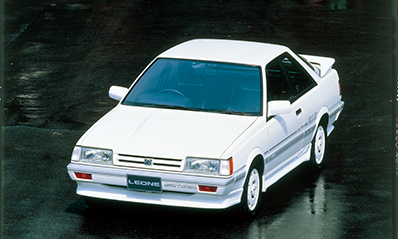
Leone 3-door hatchback coupe RX-II (1.8-litre turbo engine) uses a full-time AWD system with a bevel-geared and differential-lock centre differential.

1987

1987
MP-T 4WD developed into the full-time 4WD “ACT-4” system, operating on pulse control to predict front and rear torque distribution.

1989

1989
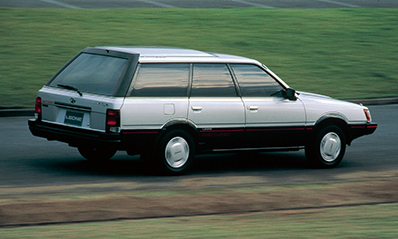
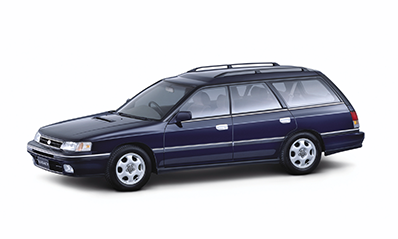
First generation Legacy released. The model became the Subaru’s new safety standard in order to further improve safety and protection in actual collisions.

1989

1989
Turbo Legacy comes equipped with the full-time 4WD system with viscous coupling LSD centre differential. A tandem brake booster braking system increases the safety of the car.

1990’s

1990

Installation of on-board crash data acquisition systems/crash test facilities.

1991

1991
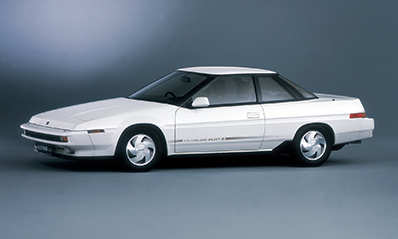
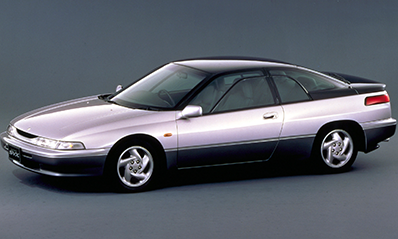
“VTD-4WD (Variable Torque Distribution 4-Wheel Drive)” for outstanding turning, and the “4WS” (four-wheel steering system) installed in the SVX for a superior balance between safety and driving enjoyment.

1993

1993
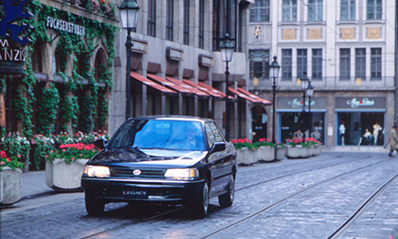
Second generation Legacy: The rigidity of frameless car bodies that provide protection against offset collisions is increased for even higher levels of collision safety.

1996

1996
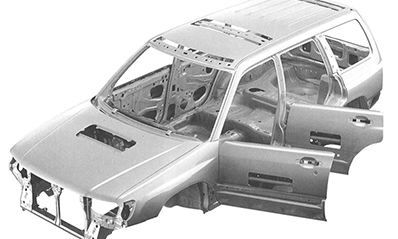
First generation Forester: Built on the Ring-Shaped Reinforcement Frames body for the current superior levels of collision safety.

1998

1998
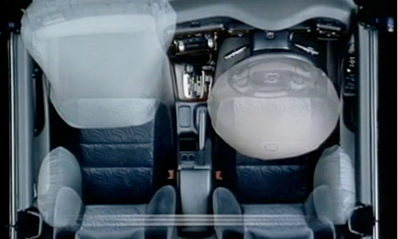
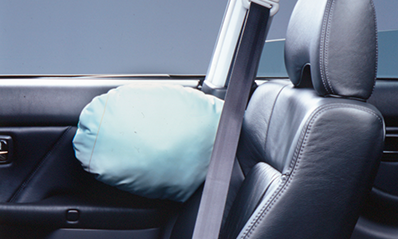
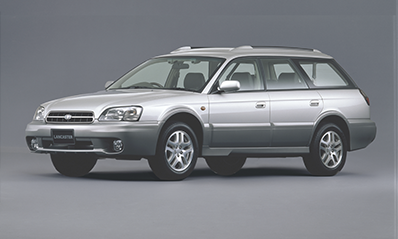
Third generation Legacy: The Ring-Shaped Reinforcement Frames body and front frame structure envelopes the Horizontally-Opposed Engine. The installation of front side airbags raises collision safety to unprecedented levels.

2000’s

2003

2003
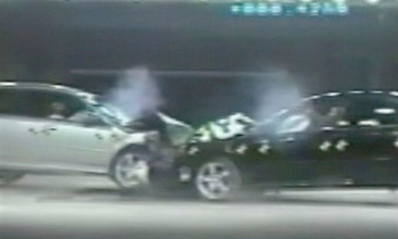
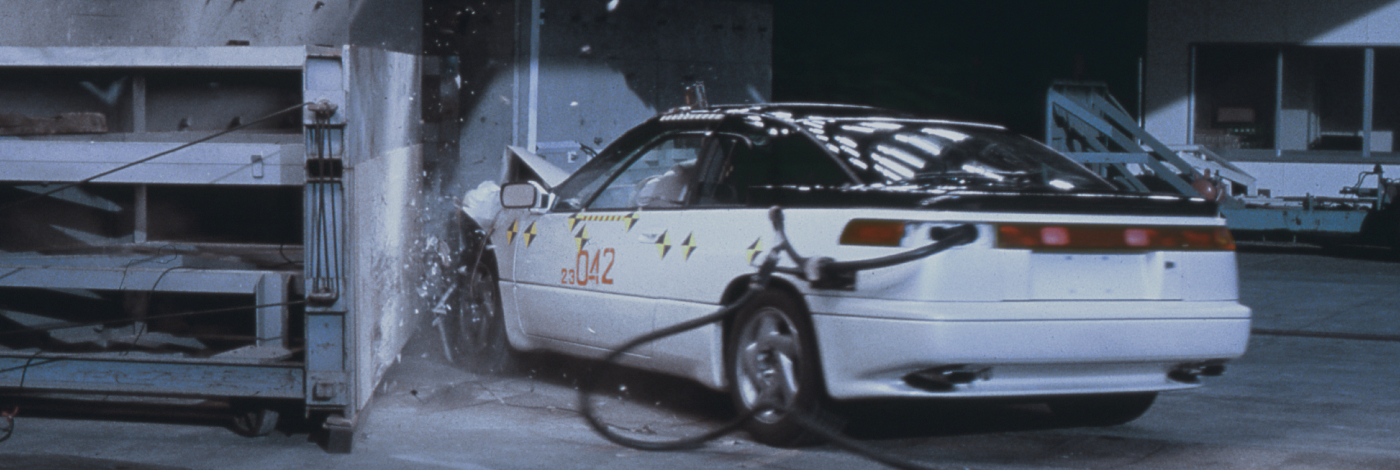
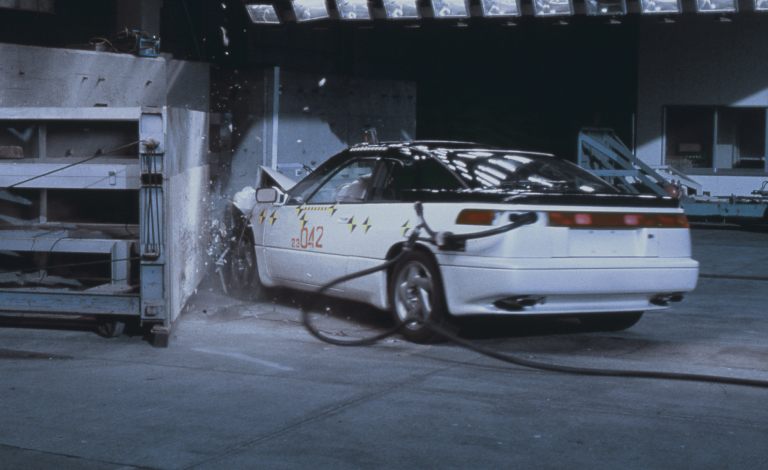
Car-to-Car crash tests: To improve safety even further, construction of crash test facilities that recreate actual crash conditions is completed.

2007

2007
Safety improved immensely with the “SUBARU Dynamic Chassis Control Concept (DC³)” concept, to take driving enjoyment to new heights.

2010’s

2010

2010
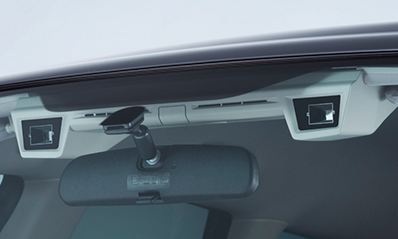
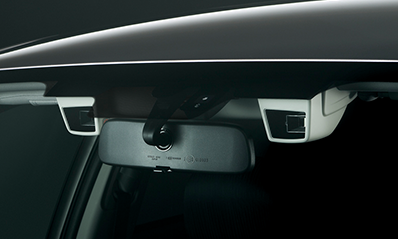
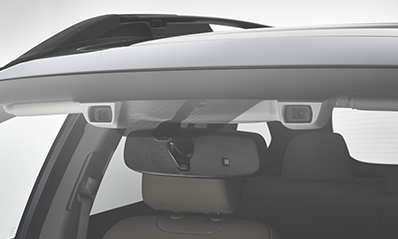
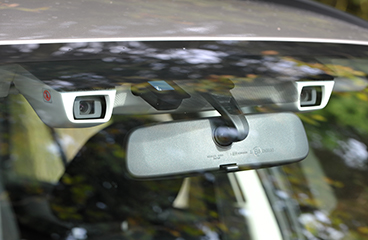
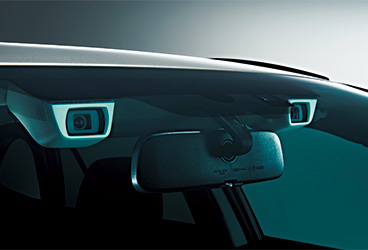
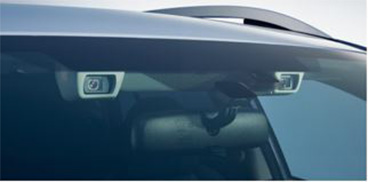
Advanced “EyeSight (ver.2)” driving support system.

2010

Advanced "EyeSight (ver.2)"* driving assist system awarded the 2010/2011 Japan Automotive Hall of Fame Car Technology of the Year *Japanese specifications.

2014

2014
EyeSight is enhanced, with improvements made to core functions such as the use of colour stereo camera images

2014

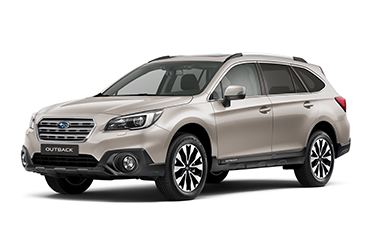
EyeSight launched in the European market with the new Outback, following on from release in Japanese, Australian and North American markets.

2015

2015
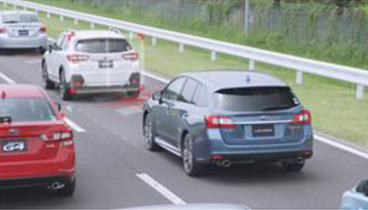
Levorg was released in Japan with the “Advanced Safety Package,” which included four functions: Subaru Rear Vehicle Detection, Side View Monitor, High Beam Assist, and EyeSight Assist Monitor. This increased safety around the entire car to enhance overall safety.

2016

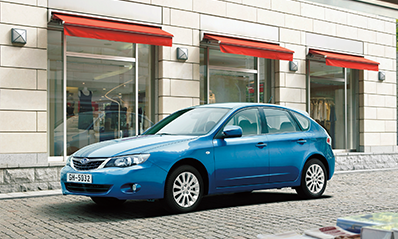
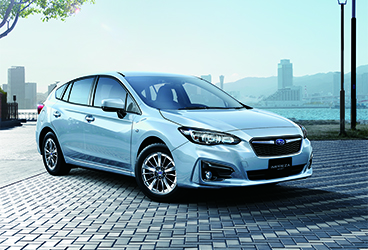
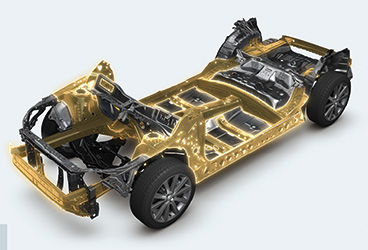
Impreza based on the Subaru Global Platform released

2016

Total of 1 million EyeSight-equipped Subaru Vehicles sold globally

2017

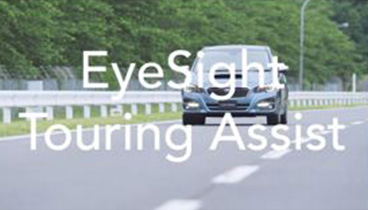
Subaru EyeSight upgraded with new “Touring Assist” function in Japan

2017

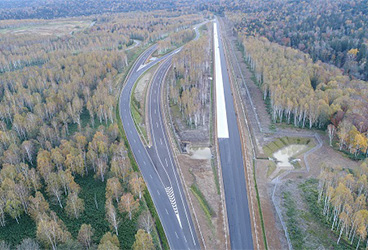
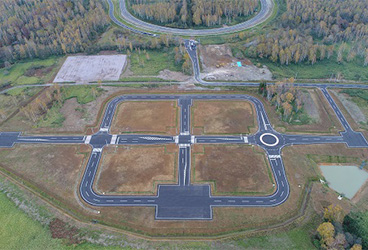
Subaru completed construction of its test tracks for Advanced Driver Assist Technologies at its Bifuka Proving Ground in Hokkaido, Japan

2018

2018
Subaru’s EyeSight Driver Assist System won the President’s Award from the Japan Techno-Economics Society

2020’s

2022. APR

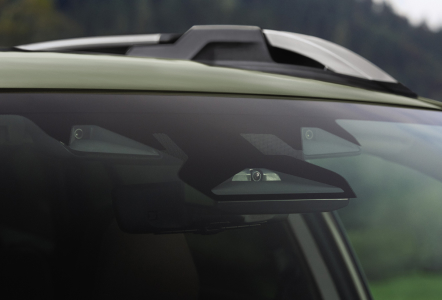
SUBARU Enhances Preventive Safety Function of 2023 Outback for North America with Newly Added Wide-Angle Mono Camera
2022. APR
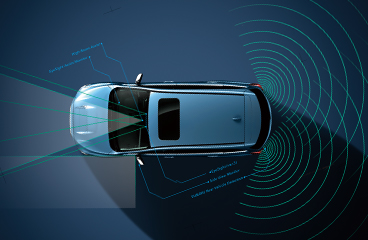
A Wide-Angle Mono Camera was added to the EyeSight Driver Assist Technology on the 2023 SUBARU Outback Touring. Joining the stereo camera-based EyeSight system, the Wide-Angle Mono Camera functions as an additional eye to recognise the range outside of the stereo camera’s viewing angle. This additional camera enhances the performance to recognise pedestrians and bicycles when the vehicle is entering an intersection at low speed. The EyeSight system processes the recognised information and gives an alert to the driver, and when necessary, applies the brakes to avoid collisions with crossing bicycles and pedestrians. In case of an accident, the system helps to mitigate the damage.

2022. AUG

SUBARU Achieves Global Sales of 5 Million EyeSight-equipped Vehicles
2022. AUG
SUBARU announced that cumulative global sales of SUBARU vehicles equipped with its EyeSight driver assist system surpassed five million units in June this year. The milestone was accomplished after 14 years and one month since the system was first introduced in Japan in May 2008.

2023. JUN

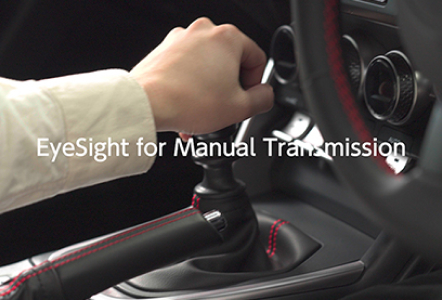
SUBARU Develops EyeSight for Manual Transmission Vehicles
2023. JUN
SUBARU announced the development of EyeSight for manual transmission (MT) vehicles.
Based on the existing EyeSight system adopted on the automatic transmission Subaru BRZ, the newly developed EyeSight for MT vehicles offers pre-collision braking, adaptive cruise control, lane departure and sway warning, lead vehicle start alert, and rear sonar warning. While retaining its high performance in collision avoidance, collision damage mitigation, and in reducing the driver’s workload, the new EyeSight system is now combined with control tailored to the driving and operating characteristics of MT vehicles. This allows the system to operate in a wide range of real-world situations, providing a high level of driving enjoyment and peace of mind.

2025. NOV

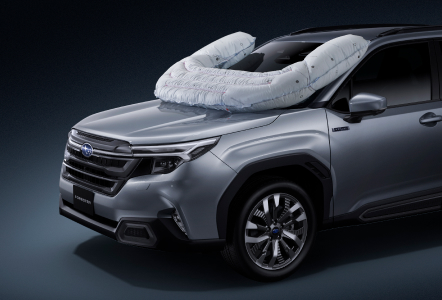
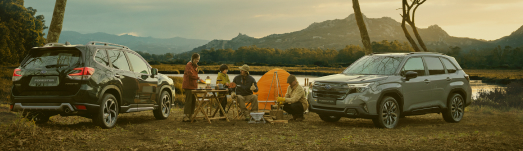
SUBARU wins “2025–2026 Japan Automotive Hall of Fame Car Technology of the Year” for its Cyclist-Compatible Pedestrian Protection Airbag
2025. NOV
SUBARU’s “Cyclist-Compatible Pedestrian Protection Airbag” has received the “2025–2026 Japan Automotive Hall of Fame Car Technology of the Year”, an annual award presented by the Japan Automotive Hall of Fame. This “Cyclist-Compatible Pedestrian Protection Airbag” was the first in the world to be adopted in the Forester (Japan-spec model) announced in April 2025, and it also provides protection for cyclists’ heads.
WhatsApp us